8th District Report
![]() |
| Pat McOsker |
As most everyone knows, the LAFD has been operating for nearly a year now with 28 companies closed each day due to budget cuts.
The impact of these "brownouts" on Local 112 firefighters and the community that we protect has been devastating. Emergency responses are now routinely delayed in Los Angeles due to the lack of available companies. As a result, many citizens have paid a terrible price and firefighters have been impacted, as well. In at least one instance, a crew of firefighters suffered burns when they entered a burning building and fought bravely and alone for an extended period of time because the next due company was closed for the day.
While no firefighters have died yet because of LAFD brownouts, if they are allowed to continue, it's only a matter of time before the inevitable happens.
The most recent high-profile example of the danger of brownouts occurred on the night of July 13 when a South L.A. golf club manufacturing plant caught fire. Within minutes, the water-reactive metal used in the process was burning intensely. Although the first arriving companies had recognized the hazard and properly elected to protect exposures while keeping water away from the burning metal, a later arriving high-level commander countermanded that order and called for hose streams to be aimed directly at the seat of the fire.
Before long, that mistake caused a huge explosion, ripping the building apart and sending chunks of burning metal high into the sky. As the fireballs rained down, they struck and injured three firefighters and ignited new fires in six nearby buildings.
At the high point of the incident, 220 firefighters were on scene battling intense flames. As one might imagine, the drain on resources caused LAFD dispatchers to scramble to keep the rest of the city protected. They immediately began moving all available fire companies around the city and into stations whose firefighters were working on the blaze. But try as they might, there weren't enough resources left to cover all the bases. For a period of time, 14 fire station districts went without any fire company to protect them. This disservice in 14 neighborhoods occurred on a day that city leaders had closed 15 fire companies to save a few bucks.
![]() |
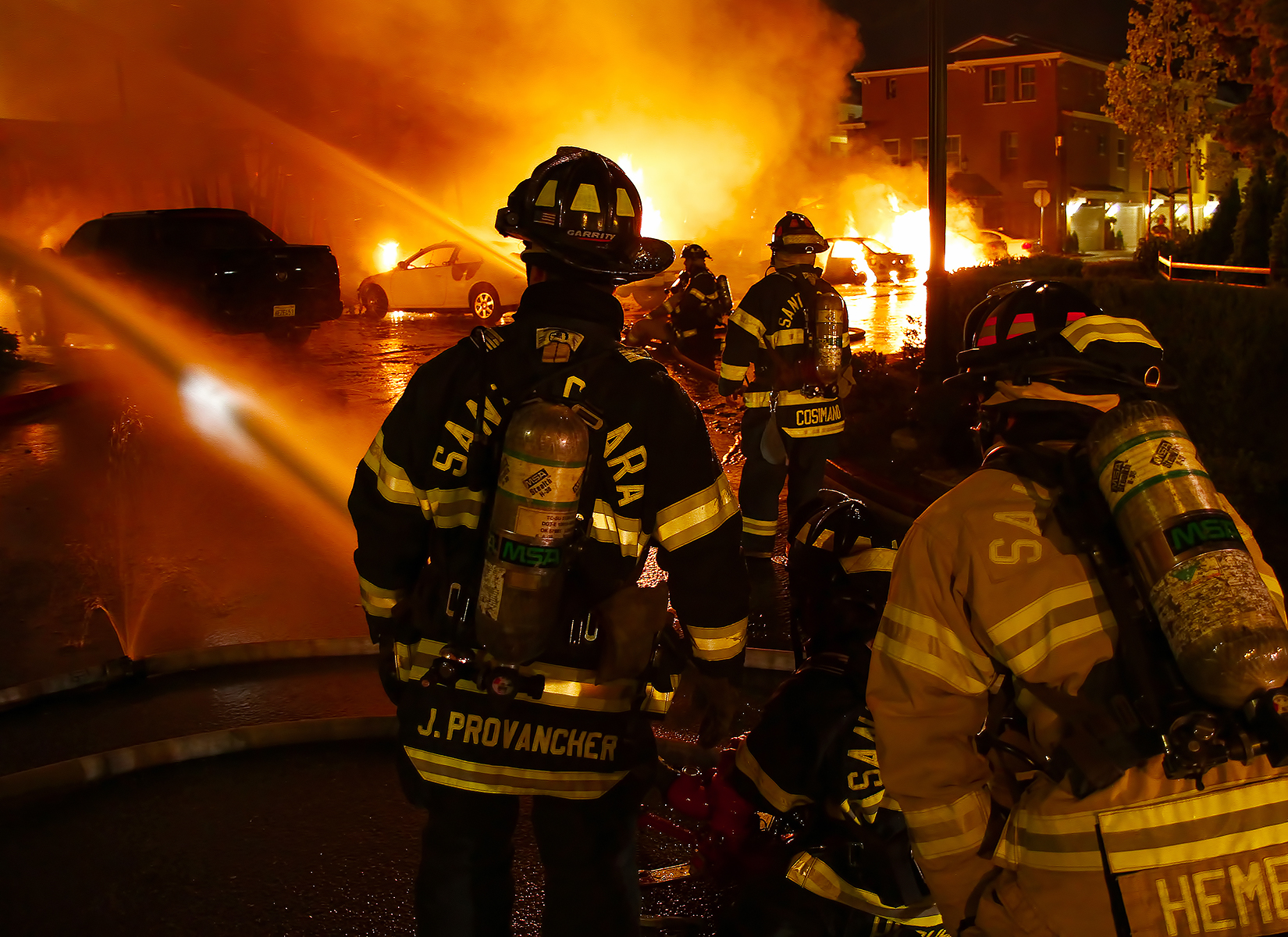
| Chunks of burning metal rained down on LA City firefighters as they battled a blaze in South Los Angeles. |
During April and May, we worked feverishly through the budget process to try to convince a majority of LA Council members to fully fund the LAFD and end brownouts in spite of the economic uncertainty. Unfortunately that effort fell just short, due in part to some last minute and ill-advised interference by a small group of anonymous saboteurs.
Now, on the heels of that setback, we are at it again.
The fall-back plan we are now lobbying is to replace brownouts with savings in four areas. Without going into too much detail, the four components are as follows: new sources of revenue which we first proposed several months ago, the continued closure of 10 BLS ambulances, a package of departmental efficiencies and the savings attained through another reasonable one-year contract deal. Together, the dollar amount in these four items adds up to what is needed to end brownouts and to retain the fixed positions that are threatened by further budget cuts.
As of this writing, our lobbying effort is on track and many elected officials are voicing their support for the plan. In the coming days, we will be back at the bargaining table to see if their support translates into a fair and final deal. We hope so. If not, we won't give up.
Local 112 is committed to doing whatever it takes to end brownouts in a way that's sensible and just, and we will get it done. In the meantime, we appreciate the support and solidarity of the vast majority of the membership during these unprecedented and difficult circumstances.